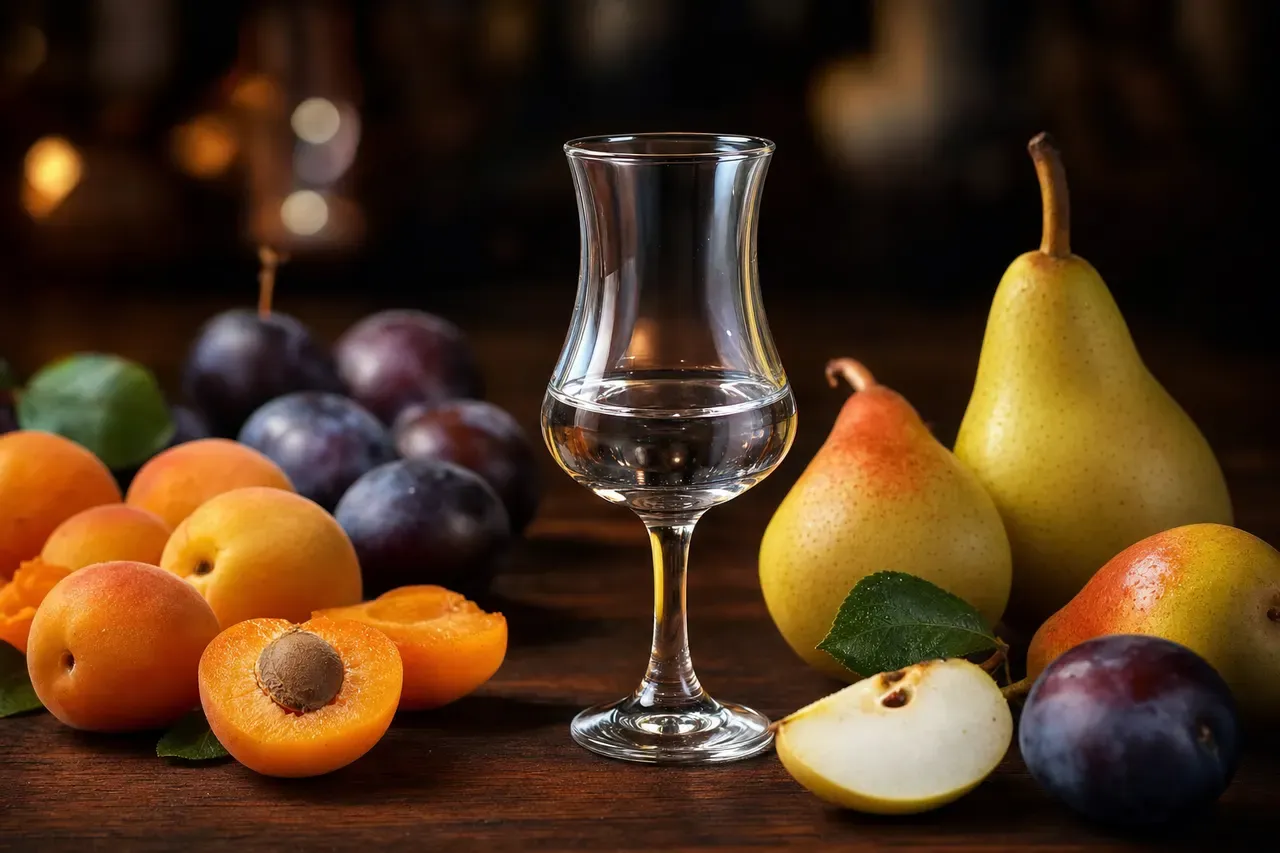
If you try one Hungarian drink, make it pálinka. It is not a flavoured liqueur and not a generic schnapps: it is a fruit brandy with a legally protected identity, and at its best it smells like standing in an orchard.
What makes it pálinka
Four rules, all of them enforceable:
- Made in Hungary. (Four apricot-growing regions in Austria are a historical exception.)
- Fruit only — grown in Hungary. No added sugar, no flavouring, no colouring.
- Nothing but distillation gives it its character; the aroma has to come from the fruit.
- Minimum 37.5% ABV, mashed, fermented, distilled and bottled in Hungary.
Anything sweetened or flavoured has to be called something else. This is why a good pálinka tastes dry and smells intensely of its fruit at the same time — a combination that surprises most first-time drinkers.
The main varieties
| Fruit | Hungarian | Character |
|---|---|---|
| Apricot | kajszibarack | Fragrant, floral, the classic |
| Plum | szilva | Deep, spicy, slightly earthy |
| Pear | körte | Delicate, elegant, aromatic |
| Sour cherry | meggy | Marzipan-like, from the stones |
| Quince | birs | Perfumed, honeyed, rare |
| Grape marc | törkely | Grappa-like, from pressed grape skins |
Two special categories worth knowing:
- Kisüzemi / kézműves — small-batch craft pálinka, usually the best value for quality.
- Ágyas pálinka — matured on a bed of whole fruit, which makes it rounder and fruitier. Excellent, but it is a different experience from the pure distillate.
How to drink it
- Temperature: 16–18 °C, or lightly chilled. Not from the freezer — cold numbs the aroma and all you taste is alcohol.
- Glass: a tulip-shaped glass concentrates the fruit on the nose.
- Pace: sip it. Hungarians drink pálinka as an aperitif before a heavy meal or as a digestif after one, not as a party shot.
- Food: it cuts through fat beautifully — try it with cured meats or a rich goulash.
How to spot the good stuff
Bad pálinka is common, especially in tourist areas. Four quick tests:
- Read the label. It must say pálinka and name the fruit. „Fruit-flavoured spirit” is a different product.
- Smell it. You should recognise the fruit instantly. Acetone or nail-polish notes mean poor distillation.
- No sweetness. Sugar on the palate means added sugar, which is not allowed.
- Check the burn. A good pálinka warms; it does not scratch the throat.
Where to buy
Specialist pálinka shops and distillery outlets carry small-batch bottles you will never see in a supermarket. Prices for a genuinely good 0.5 l bottle usually start around 6,000–9,000 HUF; anything remarkably cheap is either industrial or not pálinka at all.
Read more, in Hungarian: our full guides to pálinka varieties, how to recognise real pálinka and pálinka cocktails.