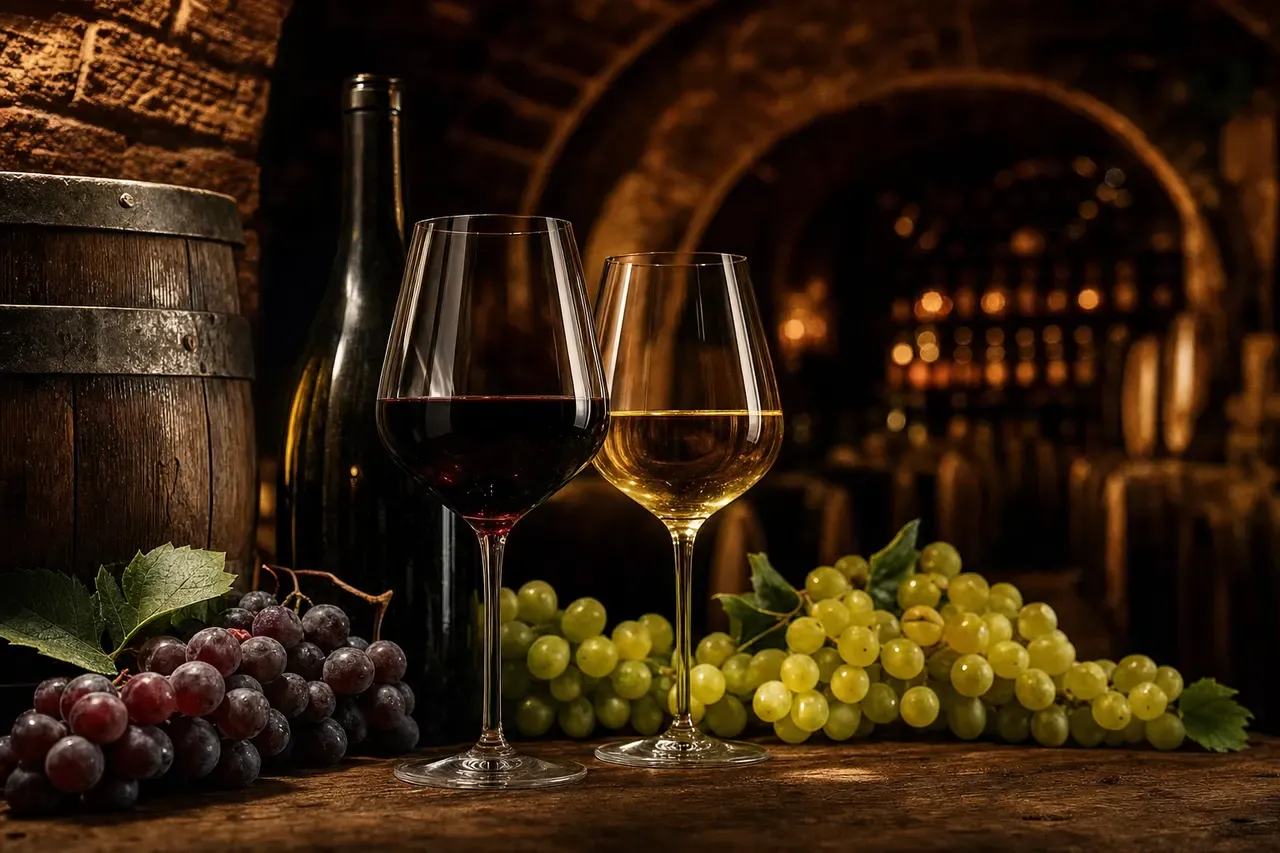
Hungary has 22 wine regions and about 65,000 hectares under vine — roughly the size of Alsace and Beaujolais combined. Very little of it is exported, which is exactly why it is worth drinking here.
The three groups
Transdanubia (west and south-west) — the red wine heartland plus the Balaton. Villány is the warmest, making ripe, structured reds; Szekszárd is spicier and more aromatic; Sopron sits on the Austrian border and shares its Blaufränkisch tradition. Around Lake Balaton, Badacsony and Somló produce mineral, volcanic whites.
North-east — Tokaj, Eger, Mátra and Bükk. This is where the most famous Hungarian wine comes from, and also the largest white wine volumes.
Great Plain (south) — Kunság, Csongrád and Hajós-Baja. Sandy soils, large volumes, mostly everyday wines.
The five regions worth knowing
| Region | Known for | Order this |
|---|---|---|
| Tokaj | Aszú, dry Furmint | Dry Furmint, then a 5-puttonyos Aszú |
| Villány | Full-bodied reds | Villányi Franc (Cabernet Franc) |
| Eger | Egri Bikavér, whites | Bikavér Superior |
| Szekszárd | Kadarka, Bikavér | Kadarka, if you can find it |
| Badacsony / Somló | Volcanic whites | Olaszrizling, Juhfark |
Tokaj
The world’s first classified wine region, demarcated in 1737 — before Port and before Bordeaux. The famous wine is Aszú, made from grapes shrivelled by noble rot, but the modern story is dry Furmint: high acid, smoky, ageworthy, and still underpriced internationally.
Villány
Hungary’s warmest region and its red wine flagship. Cabernet Franc performs so well here that it has its own protected name, Villányi Franc. Expect medium to full body, dark fruit, tobacco and gentler tannins than Cabernet Sauvignon.
Eger
Home of Egri Bikavér (“Bull’s Blood”), a blend that must contain at least three varieties with Kékfrankos at its core. The Szépasszony Valley just outside town is a row of cellars carved into rhyolite tuff.
Grapes to look for
- Furmint — high-acid white, dry or sweet, the backbone of Tokaj
- Hárslevelű — softer, more floral partner grape in Tokaj
- Olaszrizling — Hungary’s everyday white; excellent from Badacsony
- Juhfark — rare, saline, volcanic white from Somló
- Kékfrankos — the most planted red, peppery and fresh
- Kadarka — light, spicy historic red, now being revived
- Cserszegi fűszeres — aromatic crossing, easy summer white
Practical notes
- Ask for száraz (dry), félszáraz (off-dry) or édes (sweet).
- A wine spritzer is called fröccs and has its own naming system depending on the wine-to-soda ratio — it is a normal thing to order in summer.
- Hungary has a 0.00‰ drink-driving limit. If you are driving between cellars, do not drink at all.
If you also want spirits, read our guides to pálinka, Tokaji wine and Unicum and Hungarian liqueurs.