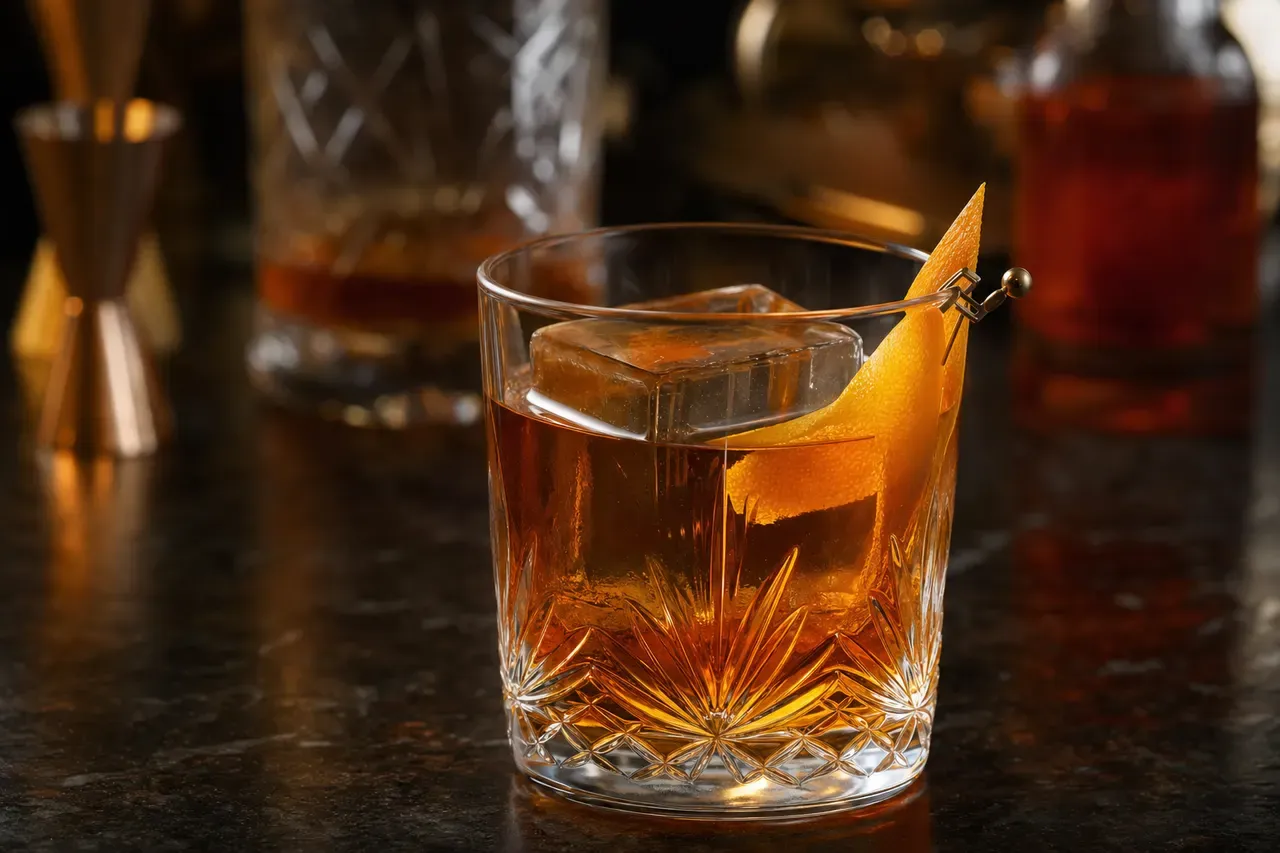
Hungary does not have a canon of native cocktails the way Italy has the Negroni or America the Old Fashioned. Its drinking culture is built on things served neat or barely touched: wine, beer, and pálinka. That is not a gap in the culture — it is the culture.
What Hungary does have is one genuinely original mixed drink, a distinctive bitter that behaves like an amaro, and a modern Budapest bar scene that has got very good at using local spirits.
Fröccs: the one truly Hungarian mixed drink
Fröccs is wine and soda water. That sounds unremarkable until you learn that every ratio has its own name, and that ordering by name is the whole point.
| Name | Wine | Soda |
|---|---|---|
| Kisfröccs (small) | 1 dl | 1 dl |
| Nagyfröccs (large) | 2 dl | 1 dl |
| Hosszúlépés (“long step”) | 1 dl | 2 dl |
| Házmester (“caretaker”) | 3 dl | 2 dl |
| Viceházmester (“deputy caretaker”) | 2 dl | 3 dl |
| Sportfröccs | 1 dl | 4 dl |
| Krúdy-fröccs | 9 dl | 1 dl |
The list continues past a dozen. The names carry jokes: the házmester has more wine than the viceházmester, because rank matters. The sportfröccs is mostly soda, for people who intend to keep going. The Krúdy-fröccs — nine parts wine to one of soda — is named after the writer Gyula Krúdy, and is essentially wine with a rumour of soda in it.
Dry white is the default. Rosé fröccs is common in summer. Ordering one and using the right name is the single easiest way to look like you know what you are doing.
Pálinka in cocktails
Pálinka is an unaged fruit brandy, which makes it behave like a very aromatic eau-de-vie in a drink. The rule is simple: do not bury it. A good apricot pálinka has an intense fruit aroma that took a distiller real effort to preserve, and drowning it in fruit juice wastes the point.
Where it works well:
- In a sour. Apricot or plum pálinka, fresh lemon, sugar syrup — a straightforward, excellent drink. Add egg white for texture if you like.
- Stirred and spirit-forward. Plum pálinka has enough weight to stand in something built like a Manhattan, with sweet vermouth and bitters.
- With bubbles. Pálinka topped with soda and a squeeze of lemon is the summer version, and much closer to how Hungarians actually drink it.
Where it works badly: anything with cream, coffee or heavy liqueurs, which flatten the fruit entirely.
Unicum: the local bitter
Unicum is a dark herbal liqueur made by the Zwack family, aged in oak, and uncompromisingly bitter. Hungarians drink it neat as a digestif, and visitors are frequently offered it as a sort of good-natured test.
In cocktails it behaves like Fernet — more medicinal than Campari, less sweet than most amari. It needs something with sugar and acid to push against; ginger beer and lime is the easiest way in, and works much like a Fernet highball. If the original is too much, Unicum Szilva, made with plum, is considerably gentler and mixes more easily.
What to actually order, by venue
Ruin bars. Famous, atmospheric, and better for beer, fröccs and simple spirits than for cocktails. Order a fröccs in summer or a craft beer if the tap list looks serious. Do not expect a well-made Negroni.
Craft beer bars. Budapest has a genuinely good craft beer scene, and this is where it lives. Hungarian IPAs, sours and stouts are widely available and worth seeking out.
Cocktail bars. The city has several serious ones, and this is where you will find pálinka and Unicum used properly. Ask what they are doing with local spirits — it is usually the most interesting thing on the list.
Wine bars. Underrated by visitors. Hungarian wine is the country’s strongest drinks category, and a wine bar will pour things you cannot easily buy at home: dry furmint, kékfrankos, Villány reds.
One phrase worth having
The toast is „Egészségedre!” — roughly EH-ges-sheh-ged-reh, meaning “to your health”. For a group it becomes „Egészségünkre!” (to our health).
And the one custom to know: many Hungarians will not clink beer glasses. They will clink happily with wine or pálinka. The story usually told traces it to 1849 and the execution of Hungarian generals at Arad, after which Austrian officers were said to have clinked their beers. Historians consider that direct link unproven and probably later folklore — but the custom is real and still widely observed. Nobody will take offence if you forget.